Hardware Engineering
Smart Chess Board
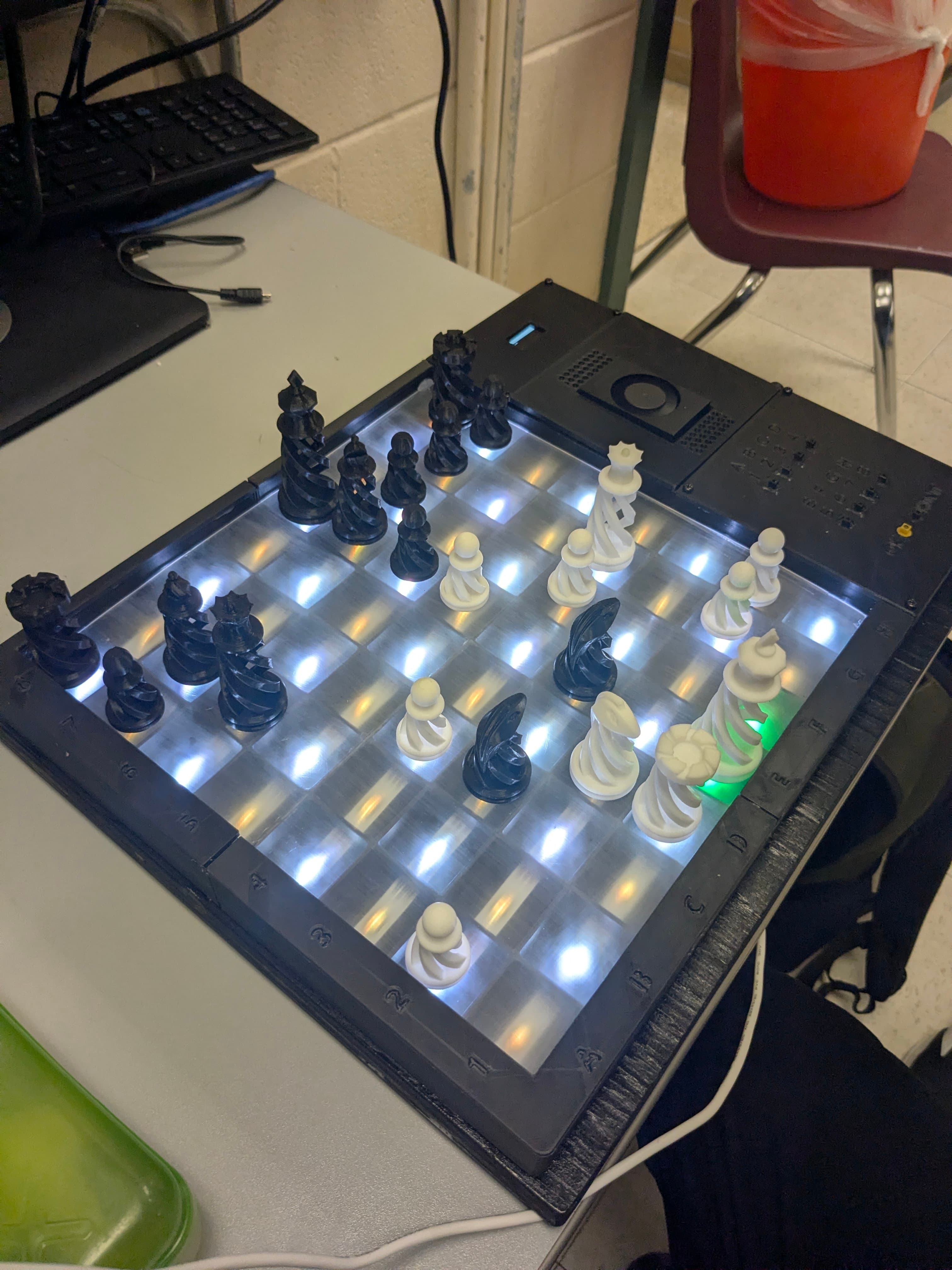
A smart chess board powered by an NVIDIA Jetson Orin Nano. Moves are entered via physical buttons or a web dashboard, with Stockfish AI, online play, and an LED board that lights up legal moves and game state in real time.
The problem
This project was actually an intergenerational project that was first created by a few students who graduated. They followed an old tutorial which used an Arduino and Raspberry Pi, but the software and GPIO communication between the boards ended up not working. So I took on the project in Grade 11. I converted it to an SPI connection and the board ended up working, but it would overheat and the startup time was almost a minute. The issue was that over time, due to updates, the board stopped working again. A new solution to the project had to be thought of.
The approach
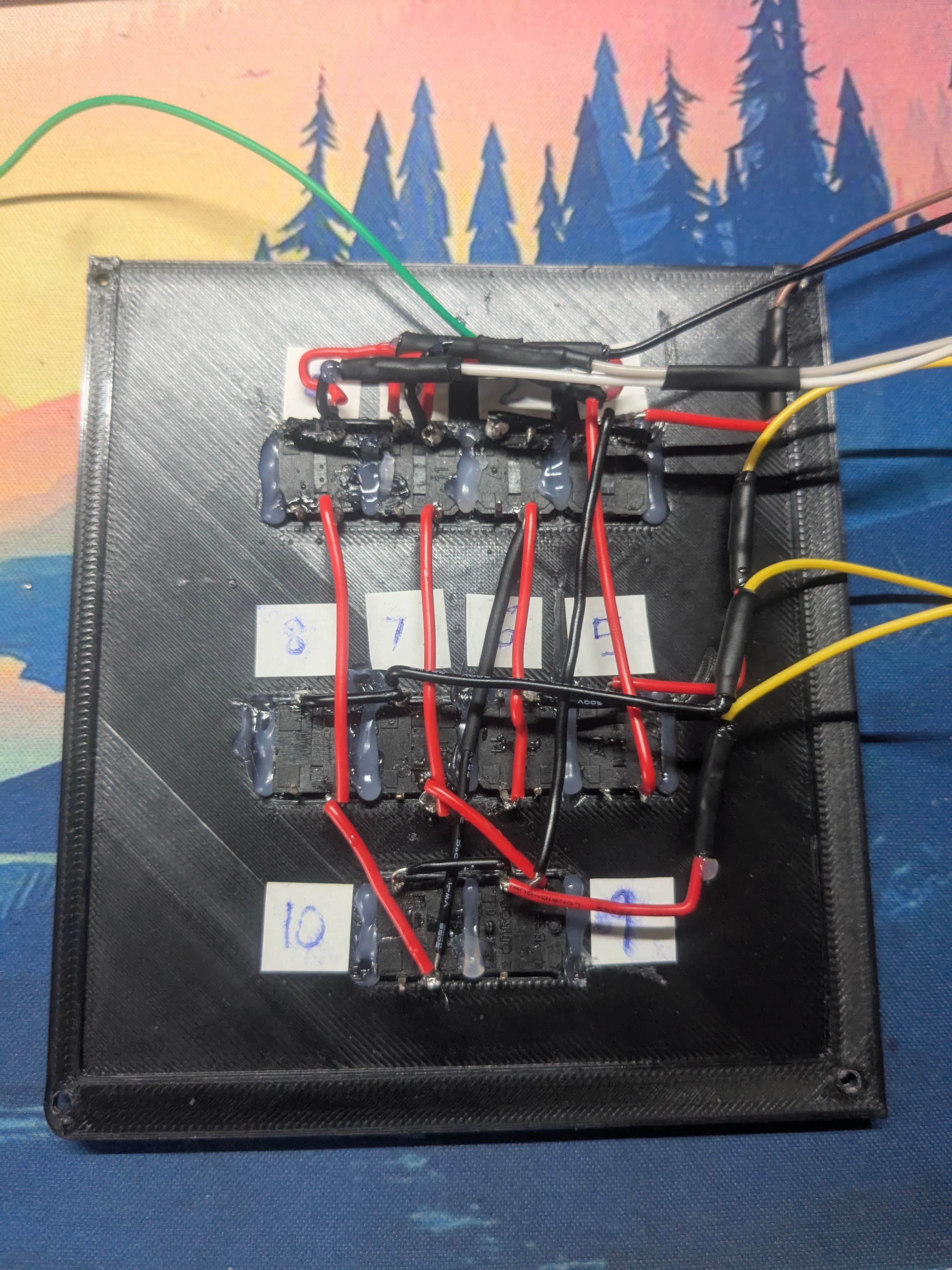
Our teacher had gotten access to the cutting-edge Nvidia Jetson Orin Nano, and it was the perfect use case. The GPIO pins could be used to wire all the buttons, lights, and OLED screen, while also being powerful enough to run its own AI engine. Stockfish was used to handle offline AI play at a difficulty the player chooses, the Lichess board API handles online games, and there's a local two-player mode. Sixty-four WS2812B LEDs under the board animate everything from illegal moves, hints, captures, and check states, with a small OLED display showing the eval bar and game state. Ten physical buttons handle move input, undo, and pawn promotion. A Flask web dashboard mirrors the board in real time, lets you build custom LED themes, download PGNs to replay over the board, and select moves. The issue was the old case didn't fit the Jetson, so I had to remodel and design parts of the case for airflow, easy access to the device, and long-term repairability.
The result
Other than the board working, the startup times improved by over 50%. Smaller touches were also added, like the ability to see everything in real time, how it automatically detects if a USB is inserted so it can save, or even smaller touches like pawn promotion, which in the past design was always a queen. The hardware itself is a modified version of an open-source DIYMachines chess board design, adapted with a Jetson electronics bay, fan airflow cutouts, and a repositioned OLED and button layout. Sources and credits can be found in the GitHub repo.
Have questions about how this was built?
Get in touch